Microcontrollers Types and Applications
Introduction
Microcontrollers are versatile electronic devices that have revolutionized the world of technology. These integrated circuits, commonly known as MCUs (MicroController Unit) or microcontrollers, come in various kinds and are used in a wide range of industries. In this beginner-friendly blog article, we will delve into the differences between microcontroller categories and explore their diverse applied areas.
They are used in embedded systems so that it’s worth to understand what an embedded system is first.
What is an embedded system?
An embedded system is a specialized combination of computer hardware and software that is specifically designed to perform a particular function. Embedded systems are like secret helpers that are hidden inside many of the devices we use every day. They are like a group of tiny computers that are designed to do specific tasks. Just like how we use our brains to remember things or make decisions (software) to coordinate with other organs (hardwares), embedded systems use their own small “brain (MCUs)” to control and manage different things in machines.
Imagine you have a toy robot that can move around and talk. Inside this robot, there is a tiny group of computers called an embedded system (Let’s call this a group of memory register). It tells the robot what to do, like moving its arms or making sounds. It’s like a little boss inside the robot, giving it instructions and making sure everything works smoothly.
Embedded systems are not just in toys. They can be found in many other things too, like your television, traffic lights, washing machines, and even cars! They help these devices do all sorts of things, like changing channels on the TV, helping cars drive safely, or making sure your clothes are cleaned properly.
Now we have learned about what an embedded system is. Let’s discuss microcontrollers types and applications bits by bits.
What are Microcontrollers?
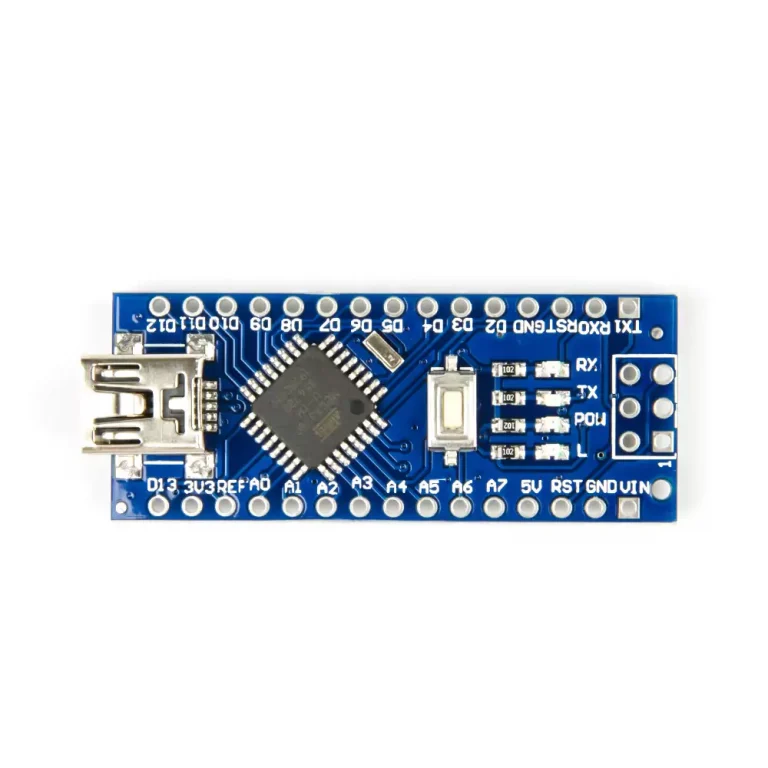
Microcontrollers are compact electronic devices that combine a microprocessor, memory, and peripherals on a single integrated circuit. They are programmable and equipped with various input and output pins to interact with the external world. Unlike general-purpose computers, they are designed for specific tasks and are commonly used in embedded systems, where they control and monitor various functions.
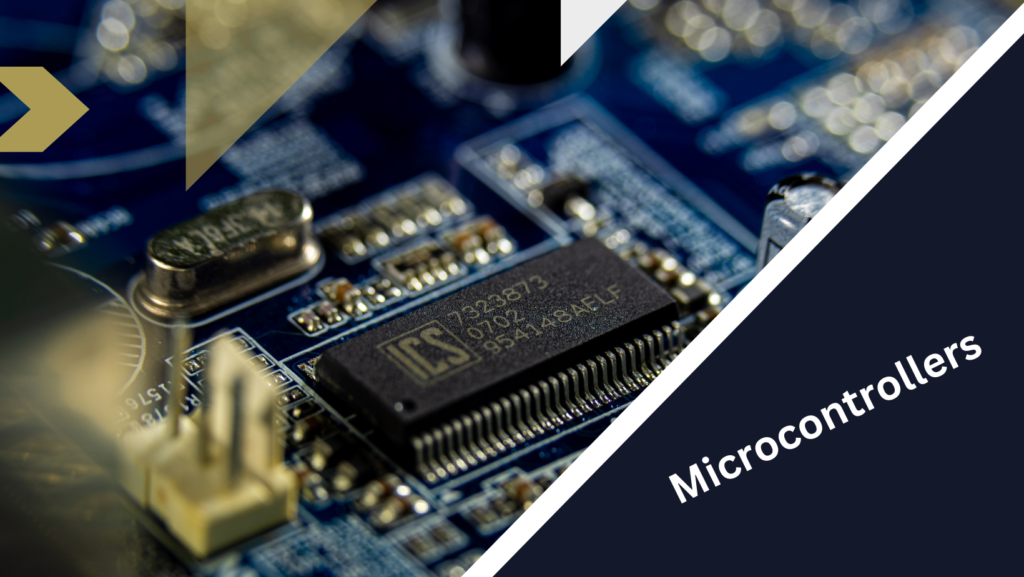
Defining microcontrollers and their basic functionality
The primary function of a microcontroller is to execute a set of predefined instructions stored in its memory. These instructions, also known as firmware or software, guide the microcontroller in performing specific tasks. The microcontroller interacts with sensors, actuators, and other external devices to gather data, process information, and produce desired output, seamlessly integrating into the embedded system it operates within.
Importance of microcontrollers in embedded systems
Embedded systems are found in numerous devices we use in our daily lives. From smartphones and home appliances to automotive systems and industrial machinery, they are the essential backbone that powers these devices. Their importance in embedded systems can be attributed to several key factors:
Compact and Low Power Consumption
Microcontrollers are designed to be small, enabling them to fit within compact devices with limited space. Moreover, they are engineered to operate efficiently with minimal power consumption, extending the device’s battery life and reducing energy requirements.
Real-Time Control and Responsiveness
Embedded systems often require real-time control and quick responsiveness. They excel in this aspect, providing rapid processing and swift execution of tasks, ensuring seamless operation and timely response to user inputs.
Cost-Effective Solution
Microcontrollers offer a cost-effective solution for many use. With their compact size, integrating multiple functionalities onto a single chip reduces hardware complexity, lowers production costs, and simplifies the overall system design.
Customization and Flexibility
Microcontrollers allow for easy customization, enabling developers to tailor them to specific application requirements. They can be programmed to perform a wide range of tasks and interact with different sensors and actuators, making them highly versatile and adaptable to various scenarios.
Before we dive into the types of microcontroller, lets understand what are bits that used in microcontroller.
What is Bit in Microcontroller?
Bits are small pieces of information. Imagine each piece of information as a puzzle piece. A bit is like the smallest puzzle piece you can have. It can either be a 0 or a 1, just like a puzzle piece can be either one colour or another. These 0s and 1s might not look like much on their own, but when you put a lot of them together, they can create amazing things.
For example, let’s say we have a message that says “HELLO”. Each letter can be represented by a group of bits. The letter ‘H’ might be represented by the bits 01001000, the letter ‘E’ by 01000101, and so on. When all these bits are put together in the right order, they create the word “HELLO”.
Bits are like the building blocks of everything you see on a computer or a phone. They help store and process information. So, every time you play a game, watch a video, or even send a message, behind the scenes, these little bits are working together to make it all happen.
Common Types of Microcontrollers
8-bit Microcontrollers
8-bit microcontrollers, as the name suggests, are built around an 8-bit processor. What does it mean by 8-bit? Well….these processors have a limited word length to store information, which means they can process data in chunks of 8 bits at a time.
16-bit Microcontrollers
A 16-bit microcontroller is like a powerful brain that helps devices perform advanced tasks. With its larger and faster processor, it can process more information, make quick decisions, and handle complex tasks. From advanced robots to gaming consoles and even cars, 16-bit microcontrollers provide the extra processing power needed to make devices smarter and more capable.
32-bit Microcontrollers
A 32-bit microcontroller is like a supercharged brain that brings enhanced power and capability to devices. With its much larger and much faster processor, it can handle even more complex tasks, process data quickly, and make decisions with precision. From high-performance electronics to advanced automation systems, 32-bit microcontrollers provide the extra processing power needed to enable advanced functionalities and push the boundaries of what devices can do.
Different bit means that lower bit microcontrollers have lesser I/O peripherals to perform tasks. For example, assume peripherals as your hands. When you can only store a piece of information to control just one hand in your brain, you can only accomplish one handful of tasks.
ARM (Advanced RISC Machine)-based Microcontrollers (RSIC = Reduced Instructions Set Computer which is based on 32-bit)
ARM-based microcontrollers are like intelligent minds that power a wide range of devices. With their specialized architecture developed by ARM, they offer exceptional processing power and energy efficiency. From smartphones and tablets to smart home devices and wearables, ARM-based microcontrollers enable seamless connectivity, impressive performance, and extended battery life, bringing advanced functionality to the palm of our hands.
Applications of Microcontrollers
Just to name a few of their application areas:
Consumer Electronics
- Smartphones, wearables, and home appliances
- Smart homes and IoT devices
Automotive Industry
- Vvehicle control systems
- Safety features and driver assistance systems
Industrial Automation
- Process control systems and automation
- SCADA systems and robotics
Healthcare and Biotechnology
- Medical devices and diagnostics
- Lab equipment and research areas
Aerospace
- Avionics systems
- Satellite and space exploration technology
Microcontrollers have become the backbone of numerous technological advancements, powering devices in various industries so it is important to understand microcontrollers types and applications. Whether it’s consumer electronics, automotive, industrial automation, healthcare, or aerospace, these versatile chips enable swift and efficient operations. By understanding their different types and applications, we gain insights into the exciting world of embedded systems.
An important thing to note is that as technology continues to evolve rapidly, microcontrollers will remain at the forefront, driving innovation and shaping the future.
Conclusion
In conclusion, understanding the different types of microcontrollers – whether it’s the ubiquitous 8-bit, the robust 16-bit, or the power-packed 32-bit – gives us an insight into the vast schema of their widespread applications. From domestic appliances, automobile electronics, to medtech innovation and state-of-the-art robotics. Our everyday lives are woven intricately into this microcosm of microcontrollers, making them truly the unsung heroes of our digital age. By investing time in further comprehension of their capabilities, you’re gaining a technical advantage that can set you apart in today’s rapidly evolving tech landscape. One thing to note is that knowledge of these tiny powerhouses isn’t just for the engineers or tech gurus – it’s the currency of anyone with a curiosity and passion for the mechanics of the modern world. Therefore, stay ahead, stay informed – the microcontroller revolution and the microcontrollers types and applications is just the beginning.